


Which one would I choose?
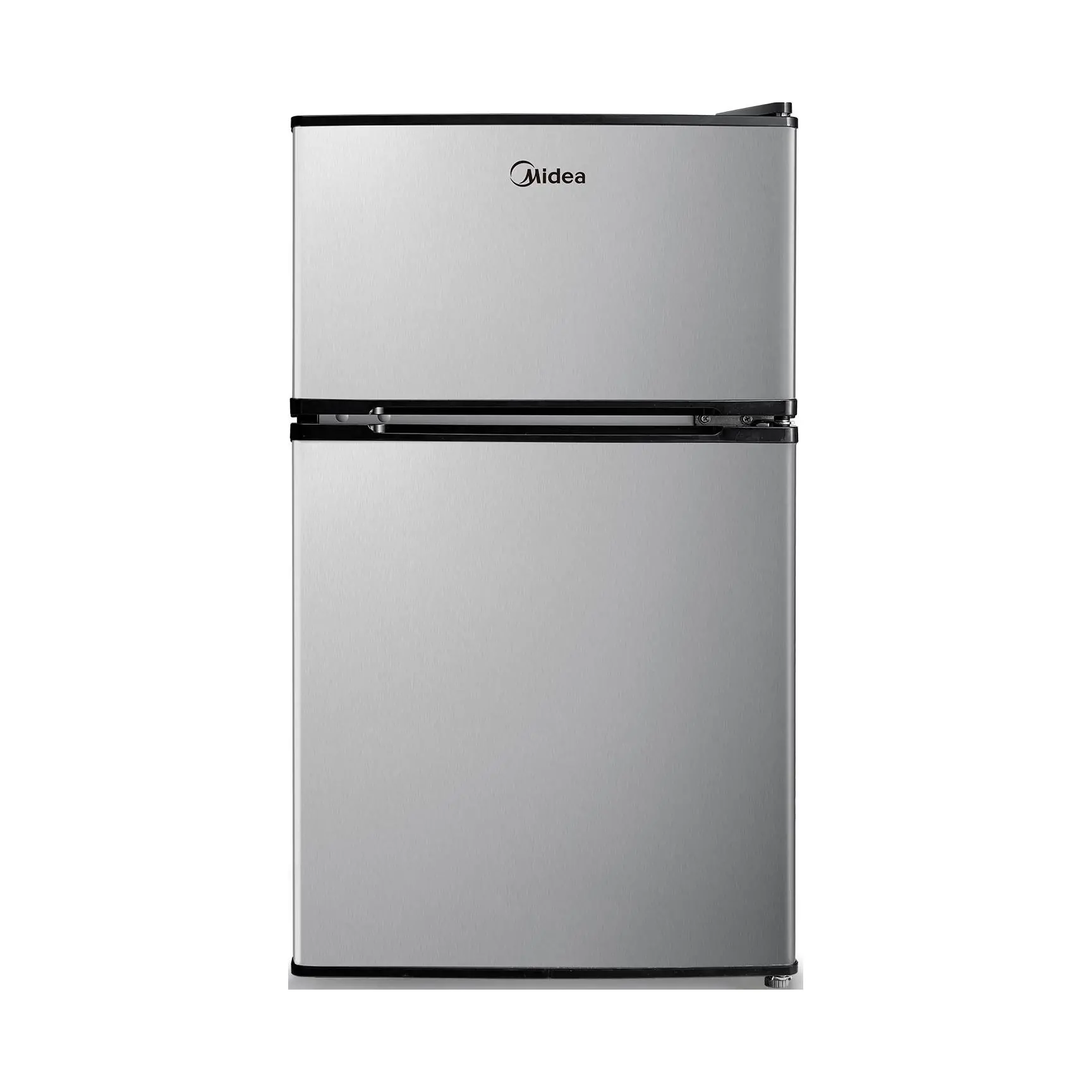
My pick for food + frozen meals
Midea WHD-113FSS1
Start here if the 2.2 cu. ft. refrigerated section and 0.9 cu. ft. freezer suit the normal load. Confirm dimensions and the current defrost instructions: manufacturer material and an ENERGY STAR record conflict on the defrost classification.
Read the full WHD-113FSS1 review →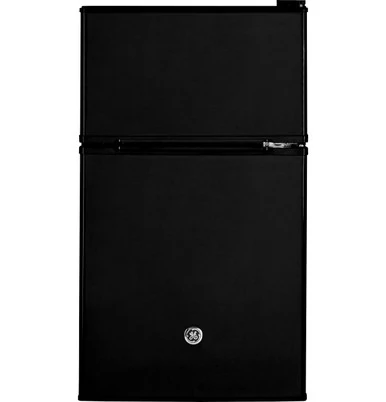
Another food + freezer option
GE GDE03GGKBB
Choose it when the shelf arrangement and documented clearance figures make the location work better. GE lists a 37-inch door-open depth and partial automatic defrost; the freezer still needs attention.
Read the full GDE03GGKBB review →The differences side by side
| Model | Shopping | Capacity | Freezer | Cabinet W × D × H | Defrost | Annual energy | Buying check |
|---|---|---|---|---|---|---|---|
MideaWHD-113FSS1My pick for food + frozen meals | 3.1 cu. ft. | Separate compartment | 18.5 × 19.9 × 33 in.Allow ventilation space; verify the size if the fit is tight. | Documentation conflict | 270 kWh / year | Confirm dimensions for a tight fit | |
GEGDE03GGKBBAnother food + freezer option | 3.1 cu. ft. | Separate compartment | 18.75 × 20.125 × 33.375 in.Cabinet size only; allow 37 inches of depth with the door open. | Partial automatic | 321 kWh / year | 37 in. door-open depth |
Cabinet dimensions exclude ventilation and door-opening space. Annual kWh and can capacities are manufacturer or certification figures. Model-specific source notes.
Compare access before the rounded volume figures
Both models have separate freezer doors, glass shelving and a crisper. Midea lists 2.2 cu. ft. refrigerated and 0.9 cu. ft. freezer. GE lists rounded compartment figures of about 2.1 and 0.9 cu. ft. alongside a 3.1 cu. ft. total.
That small numerical difference does not establish which holds your containers better. Check shelf spacing, door bins and the opening needed to remove the crisper. We have not measured a lunch-box or frozen-meal count for either model.
I would compare the usual food load first. If almost everything is refrigerated rather than frozen, the more important alternative may be a freezerless fridge rather than either of these two.

GE provides a clearer complete installation example
GE specifies half an inch at each side and two inches above and behind. Combined with its cabinet, that gives 19.75 × 22.125 × 35.375 inches before checking the open door. Its 37-inch door-open depth can matter in a narrow aisle.
Midea lists a cabinet of 18.5 × 19.9 × 33 inches, but retailer fields differ. The linked manual gives side and rear gaps while a complete current installation envelope remains unresolved. I would not decide a tight fit from the smaller-looking cabinet alone.
Both need the appropriate freestanding installation and operating environment. Neither is assessed here as a built-in, outdoor or garage-ready solution.
Evidence and source notes ↗Defrost evidence and the energy difference
The GE description is partial automatic defrost; it does not eliminate freezer maintenance. For the Midea, manufacturer material describes manual defrost while an exact-model ENERGY STAR record lists automatic. Resolve the current unit’s instructions rather than choosing whichever label sounds more convenient.
Midea’s published annual figure is 270 kWh; GE’s is 321 kWh. At an example rate of 18 cents per kWh, the difference is $9.18 per year. At 30 cents, it is $15.30. Those are calculations from published values, not a measured comparison in the same room.
I would weigh that difference alongside fit, purchase cost and the shelf arrangement. Check the selected seller and condition for both models. A valid Amazon listing is not proof of a new qualifying unit or delivery to your address.
Evidence and source notes ↗A narrow-room decision, step by step
Suppose both models suit the food load but the location is close to the limit. I would first use GE’s complete documented cabinet-plus-clearance envelope to rule the position in or out for further checking. For Midea, I would resolve the outstanding dimensions and ventilation instead of filling the gap with the GE’s requirements. Shared capacity does not mean shared installation instructions.
If both can be installed correctly, compare the shelf and door access you prefer, then the actual new/used offer and warranty. The published energy difference is 51 kWh/year. At 18 cents per kWh that is $9.18 a year, or $45.90 over five years under unchanged assumptions. A modest difference in the purchase total or an awkward daily layout can matter more than that estimate.
Questions before you choose
Which one is quieter?
No controlled sound comparison has been established. Do not infer a winner from unrelated manufacturer figures or isolated owner comments.
Which one has the bigger freezer?
Both use approximately 0.9 cu. ft. in the documented figures used here. Actual package fit and access have not been measured.
Does lower annual kWh make the Midea the automatic winner?
No. It is one ownership factor. The useful fridge must also fit, hold the intended food and have a suitable offer and support arrangement.