

The shortlist for this job
My pick for food + frozen meals
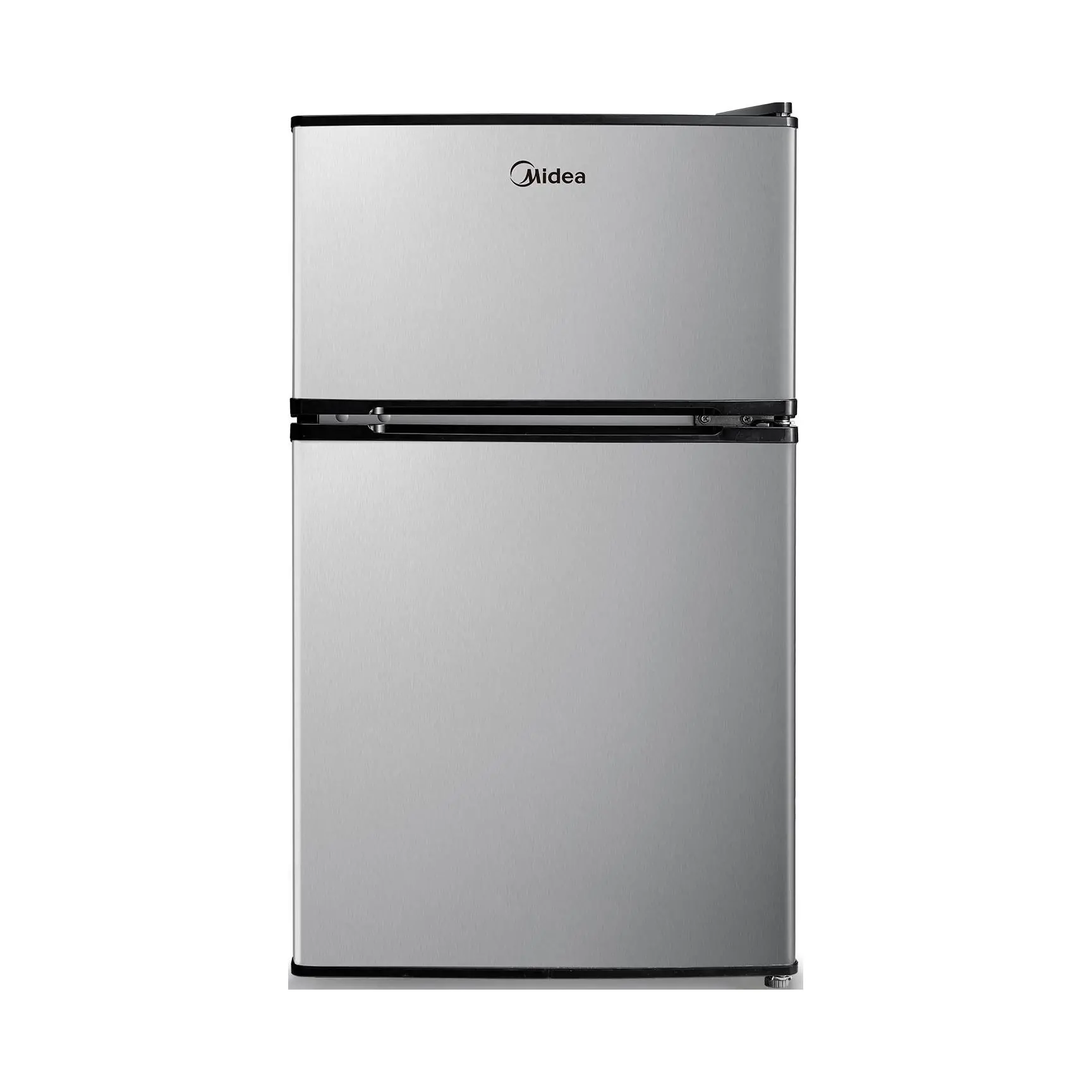
Midea WHD-113FSS1
Its documented 2.2 cu. ft. refrigerator and 0.9 cu. ft. freezer make the tradeoff easy to understand. I would choose it when frozen meals are part of the normal routine, after resolving the defrost-record conflict and any tight installation.
Read the full WHD-113FSS1 review →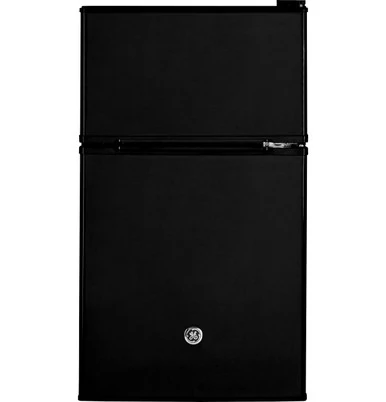
Another food + freezer option
GE GDE03GGKBB
The closest food-and-freezer alternative in the shortlist. GE gives detailed clearance and door-open figures, and the refrigerator has partial automatic defrost. The freezer still requires maintenance; the whole appliance is not frost-free.
Read the full GDE03GGKBB review →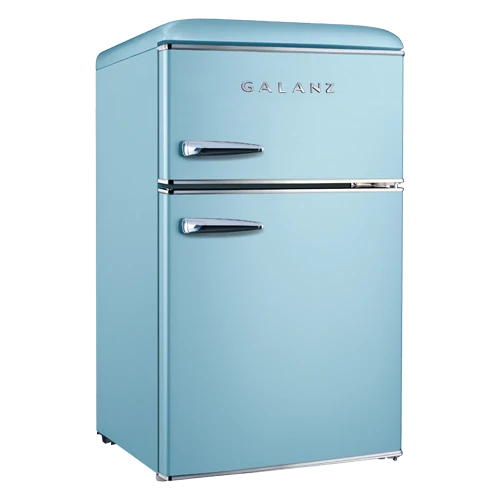
Retro style, with checks first
Galanz GLR31TBEER
A blue retro option with a documented 2.2 / 0.9 cu. ft. split and manual-based installation dimensions. I would consider it for a visible room, but compare Midea or GE for an immediate purchase: the checked exact Galanz listing was unavailable.
Buy on AmazonThis exact listing was unavailable when checked. Compare the alternatives before choosing it.
Read the full GLR31TBEER review →Compare the choices
| Model | Shopping | Capacity | Freezer | Cabinet W × D × H | Defrost | Annual energy | Buying check |
|---|---|---|---|---|---|---|---|
MideaWHD-113FSS1My pick for food + frozen meals | 3.1 cu. ft. | Separate compartment | 18.5 × 19.9 × 33 in.Allow ventilation space; verify the size if the fit is tight. | Documentation conflict | 270 kWh / year | Confirm dimensions for a tight fit | |
GEGDE03GGKBBAnother food + freezer option | 3.1 cu. ft. | Separate compartment | 18.75 × 20.125 × 33.375 in.Cabinet size only; allow 37 inches of depth with the door open. | Partial automatic | 321 kWh / year | 37 in. door-open depth | |
GalanzGLR31TBEERRetro style, with checks first | Buy on AmazonThis exact listing was unavailable when checked. Compare the alternatives before choosing it. | 3.1 cu. ft. | Separate compartment | 19.17 × 23.31 × 35.16 in.Manufacturer unit dimensions; check door and handle access separately. | Partial automatic; freezer manual | 320 kWh / year | Freestanding; freezer needs defrost |
Cabinet dimensions exclude ventilation and door-opening space. Annual kWh and can capacities are manufacturer or certification figures. Model-specific source notes.
Separate freezer or internal ice compartment?
Start with what you want to keep frozen and for how long. A separate freezer has its own door and compartment. An internal ice compartment is a different arrangement and can have storage limitations that are easy to overlook in a product title.
The BLACK+DECKER BCRK17B is a useful example: its small internal compartment is limited to short-term frozen storage. I would choose a documented separate-freezer model for a regular supply of frozen meals. The word “freezer” on a marketplace page is not enough by itself.
Actual temperatures still matter. Use an appliance thermometer and follow food-storage guidance and the exact model’s instructions. A separate door does not prove that every installation or thermostat setting will deliver the intended temperature.
Evidence and source notes ↗Read the compartment figures separately
The Midea’s 3.1 cu. ft. total includes 0.9 cu. ft. of freezer, leaving 2.2 cu. ft. for refrigerated food. That split can be useful for one person’s meals, but it is a different proposition from an all-refrigerator cabinet.
GE lists approximately 2.1 cu. ft. refrigerated and 0.9 cu. ft. freezer alongside a 3.1 cu. ft. total. Published compartment figures are rounded, so the displayed numbers need not add perfectly. Do not infer usable package capacity from that rounding difference.
Measure your usual frozen-food packages against documented internal dimensions where available, or inspect the actual unit. We have not measured how many meals fit. Avoid treating a cubic-foot figure as a reliable meal count.

A separate freezer still needs upkeep
The Midea’s manufacturer material describes manual defrost, while an exact ENERGY STAR record lists automatic. Confirm the current unit’s instructions. The GE’s partial automatic defrost applies to the refrigerator arrangement; it does not eliminate freezer maintenance. I would consider where the food will go during defrosting before deciding which model is easier to live with.
Follow the exact instructions for switching off, food relocation, drainage and cleaning. Do not chip ice with sharp tools or add electrical heat unless the manufacturer specifically permits a method. Keep the door seal clean and check that food packaging is not preventing closure.
A frost-free claim, an automatic icemaker or independent compartment control must be documented for the exact model. None should be inferred from the two-door appearance. This shortlist does not establish a frost-free or automatic-icemaker winner.
Evidence and source notes ↗Compare the location as carefully as the freezer
Door swing can decide between otherwise similar cabinets. GE specifies 37 inches of depth with its door open, plus its separate ventilation gaps. For the Midea, manufacturer and retailer dimensions differ, so resolve the shipped unit’s measurements before buying for a narrow opening.
Keep the operating environment within the exact model’s limits. A small indoor fridge is not automatically suitable for an unheated garage or outdoor position. Choose a dedicated documented solution if that is the actual location.
If you rarely freeze anything, I would reconsider the category entirely. A freezerless food fridge may give more useful refrigerated space for the same everyday routine.
Evidence and source notes ↗Three questions before paying for a freezer
The Midea allocates about 29% of its stated total volume to the freezer. I would accept that split for regular frozen meals, but not for an occasional ice tray when fresh groceries are already cramped.
| Question | Why it changes the choice |
|---|---|
| Do you regularly keep frozen food? | If not, the compartment takes room from the refrigerated load. Consider a freezerless food fridge. |
| Do the packages fit the opening and shelves? | A 0.9 cu. ft. figure cannot establish a meal count or guarantee that an awkward box fits. |
| Where will the food go during maintenance? | Any required defrosting needs a plan that maintains suitable food-storage conditions. |
Midea or GE: decide in a useful order
First confirm that both layouts meet the food requirement. Next measure installation and door access. Only then compare the selected offers and estimated running costs. This order prevents a small price difference from distracting from a cabinet or door that does not work in the room.
At an example electricity rate of 18 cents per kWh, the published GE figure adds $9.18 a year over Midea’s. That estimate is worth knowing, but it is not a cooling-performance result. The complete Midea–GE comparison sets it beside the clearance figures, shelf arrangements and defrost distinction.
Questions before you choose
Is a two-door mini fridge better?
It can be better for a routine that includes frozen meals. It is not automatically better for someone who mainly needs refrigerated food. Compare the compartment split, fit and maintenance.
Does the GE GDE03GGKBB have a frost-free freezer?
The documented description is partial automatic defrost. The freezer still needs maintenance. Do not treat that wording as a whole-appliance frost-free claim.
How many frozen meals fit in 0.9 cu. ft.?
There is no reliable universal count. Packaging shapes, internal obstructions and access space matter. This guide does not claim a measured meal capacity.