

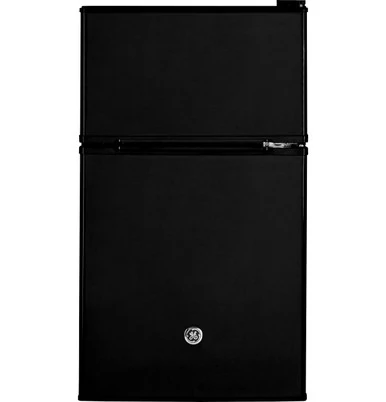
My verdict
The GE is a credible alternative when you want separate fresh and frozen storage and can accommodate its installation envelope. I would compare the shelf arrangement and access with the Midea instead of treating their shared 3.1 cu. ft. headline as a tie.
The clearest practical distinction is that GE documents the open-door depth and clearance requirements. That helps rule out a cramped position before ordering. It does not mean the appliance will fit every nominally similar opening or that cooling performance has been measured here.
Reasons to choose it
- Separate freezer, glass shelving and a crisper.
- Documented ventilation and open-door depth.
- Partial automatic defrost in the refrigerator arrangement.
Reasons to choose differently
- Freezer maintenance remains necessary.
- Published annual energy use is higher than the Midea example.
- A tight aisle can make the 37-inch door-open depth awkward.
| Detail | What to know |
|---|---|
| Exact model | GE GDE03GGKBB |
| Total capacity | 3.1 cu. ft. |
| Cabinet W × D × H | 18.75 × 20.125 × 33.375 in. |
| Defrost | Partial automatic |
| Annual energy | 321 kWh/year (published) |
| Documented supply | 120 V / 60 Hz; follow the exact electrical instructions |
| Weight and basis | 56 lb net; 63 lb shipping |
Compare the containers and the door storage
GE lists a full and a half glass shelf, a crisper with cover and door storage. I would check how those levels suit the containers used most often. A different shelf arrangement can matter more than a small difference in nominal compartment volume.
The published refrigerated and freezer figures are approximately 2.1 and 0.9 cu. ft., alongside a 3.1 cu. ft. total. These are rounded figures. Do not interpret their arithmetic difference as a missing usable compartment.
One verified owner of the black model liked the separate freezer but found the door’s can storage tight to use. That is a useful access question to check, not a measured result for all owners. Confirm the supplied shelves and any loose accessories with the exact offer.

Use the installation figures to make a real go/no-go decision
For an illustrative 20-inch-wide, 23-inch-deep and 36-inch-high open placement, the GE’s documented 19.75 × 22.125 × 35.375-inch cabinet-plus-clearance envelope is within those limits. The remaining margins are only 0.25 inch in width, 0.875 inch in depth and 0.625 inch in height. Those are calculated margins, not installation tolerances or proof that a surrounding cabinet is permitted.
The door-open requirement remains a separate decision. The published 37-inch depth with the door open should not be confused with the 22.125-inch closed-cabinet-plus-rear-gap figure. Establish the measurement reference, allow the specified rear space and check whether the door and removable interior parts obstruct the room’s walking route.
Compared with the Midea, the GE’s energy-label example adds $45.90 over five years at 18 cents per kWh, assuming unchanged consumption and tariff. I would consider that alongside purchase price and shelf access. It is usually more useful to compare the complete ownership choice than to call either model better because both advertise 3.1 cu. ft.
| Your situation | My choice and reason |
|---|---|
| Fit is the deciding issue | Use the documented clearances and door-open figure, then check the actual room. This is the stronger installation worksheet of the two comparable two-door picks. |
| You expect a frost-free freezer | Choose differently or change that expectation. Partial automatic defrost does not remove freezer upkeep. |
| You already prefer the Midea’s arrangement | Compare the delivered offer and maintenance instructions; the GE’s rounded capacity figures alone are not a reason to switch. |
Check the installation before ordering
The cabinet is listed at 18.75 inches wide, 20.125 inches deep and 33.375 inches high. GE specifies half an inch at each side and two inches above and behind. Those figures produce a 19.75 × 22.125 × 35.375-inch cabinet-plus-clearance envelope.
The separate door-open depth is 37 inches. Check that the door can open and the interior parts can be accessed without blocking a necessary walkway. Keep the appliance freestanding and follow the operating-environment instructions.
Evidence and source notes ↗Living with this fridge
Partial automatic defrost is useful wording only when the compartments are understood. It does not establish a frost-free freezer. Plan the freezer’s maintenance and safe food relocation as the manual requires.
GE’s published annual figure is 321 kWh. At an illustrative 18 cents per kWh, that is $57.78 per year, or $9.18 more than the Midea’s published 270 kWh at the same rate. Use your own tariff and recognise that actual consumption can differ.
I would organise door storage around easy removal, not simply whether a can can be pushed into place. The reported tight can access is a useful prompt to inspect the arrangement. Larger containers are often better assessed on the adjustable shelf levels. Use the clearance guide to separate storage access from cabinet fit.
Support, condition and warranty
GE lists a limited one-year entire-appliance parts-and-labour warranty. Verify eligibility for the exact purchase.
Use GE’s exact GDE03GGKBB support entry and keep the model, serial label and purchase record. Check warranty coverage, seller and condition before buying; do not assume a marketplace offer automatically qualifies.
Inspect the door and cabinet after delivery and follow the standing and start-up instructions. Verify actual temperatures before relying on the appliance for food.
When I would choose a different model
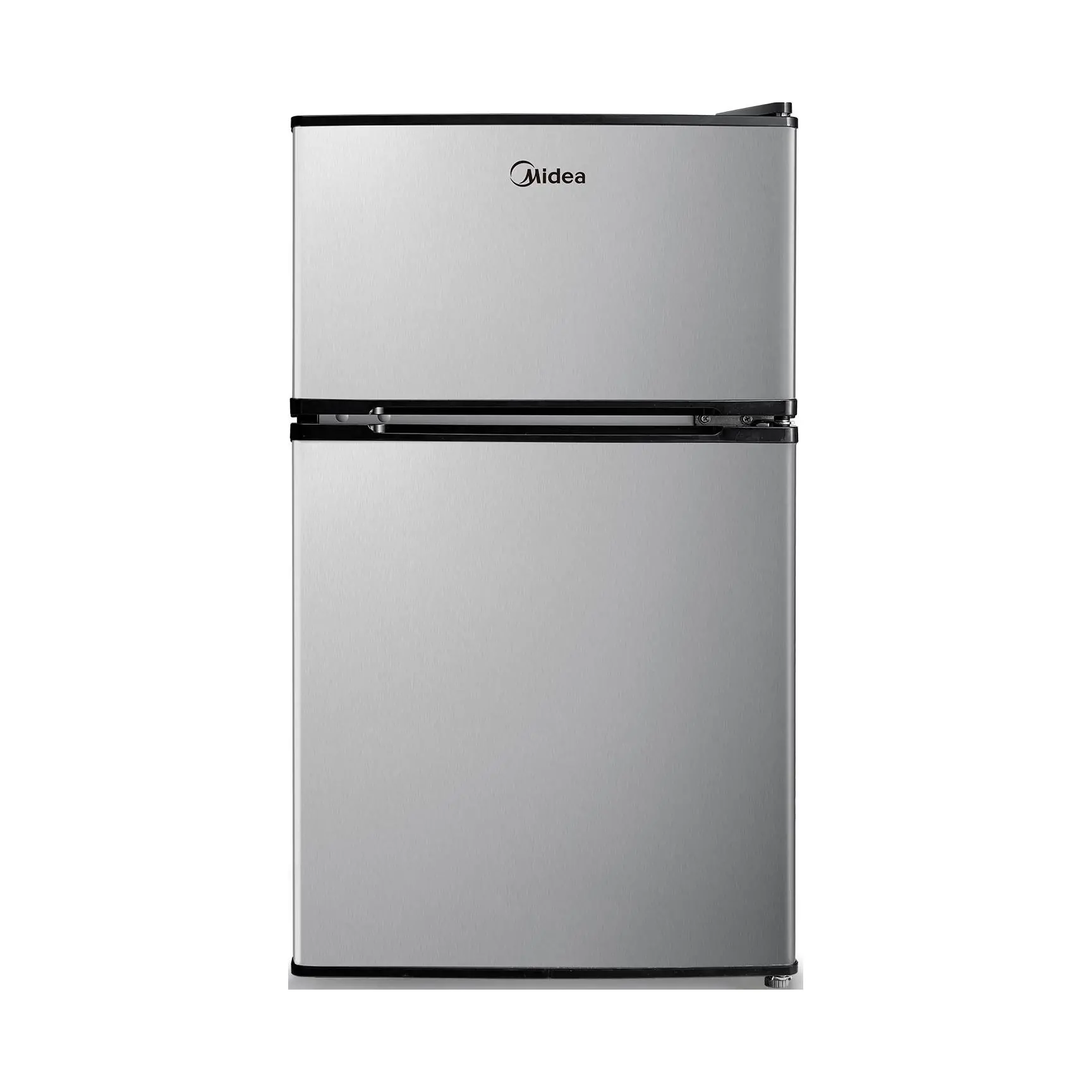
My pick for food + frozen meals
Midea WHD-113FSS1
My starting food-and-freezer choice if its layout and verified installation suit the room equally well. It has a lower published annual energy figure, but its defrost records conflict.
Read the full WHD-113FSS1 review →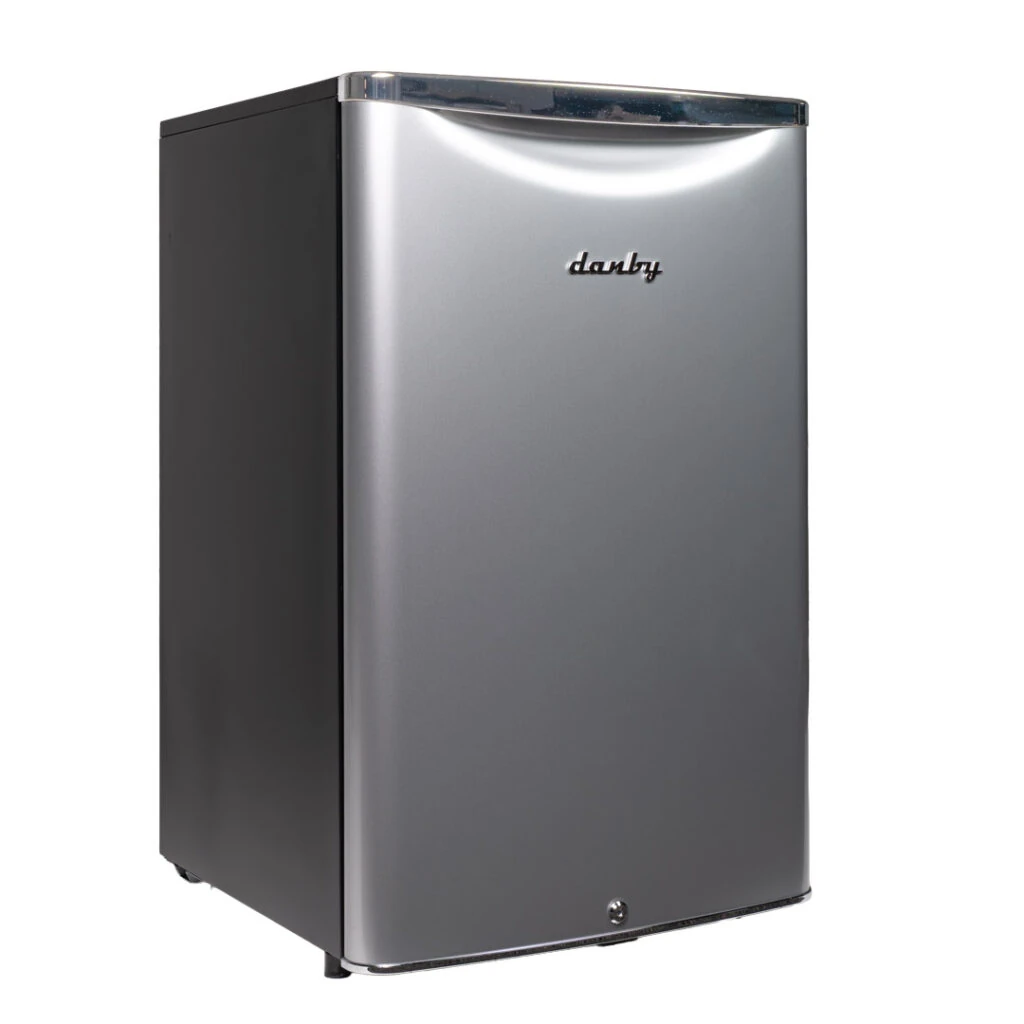
More room for fresh food
Danby DAR044A6DDB
Investigate the Danby when frozen storage is unnecessary and the priority is more fresh-food room. Check its much larger clearance needs and a suitable offer.
Buy on AmazonConfirm a current offer for this exact model on Amazon before choosing it.
Read the full DAR044A6DDB review →Before you buy
Match the black GDE03GGKBB. GE offers related models and finishes, but a similar product name does not establish an equivalent listing. Check the selected condition, delivery and support eligibility.
For a narrow space, write down both the cabinet-plus-clearance envelope and the 37-inch open-door depth before comparing price.
Evidence and source notes ↗Questions before you choose
How much room does the GDE03GGKBB need?
The listed cabinet plus stated gaps is 19.75 × 22.125 × 35.375 inches. Door opening is a separate check: GE lists 37 inches of depth with the door open.
Is its freezer frost-free?
No whole-appliance frost-free claim is established. The documented description is partial automatic defrost, and the freezer still needs maintenance.
Why do the compartment numbers not add to 3.1?
The published compartment figures are rounded. Treat them as approximate figures and do not infer an extra usable space from the arithmetic.